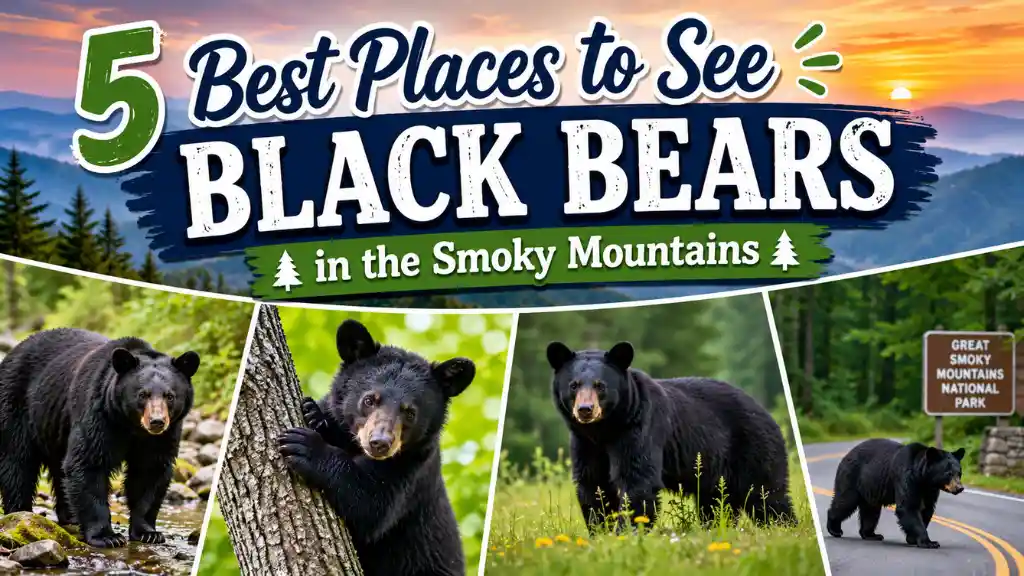

There’s a particular kind of silence that happens when you spot a black bear in the wild for the first time.
You’re probably rolling slowly down the Cades Cove loop, radio on low, kids half-asleep in the back, when someone says it — “Wait, is that…?” — and suddenly everyone’s awake. The car stops. The bear doesn’t even look up. It’s just moving through the meadow grass like it owns the whole valley, because honestly, it does.
Your heart does something you didn’t expect. Some mix of reverence and relief and raw wonder that you can’t manufacture at a zoo or a wildlife documentary. It’s real. It’s wild. And it’s happening thirty feet from your car window.
That moment is why millions of people visit Great Smoky Mountains National Park every year specifically hoping to see a black bear. And with approximately 1,900 black bears living within the park’s 522,000 acres — roughly two bears per square mile — your chances of a genuine sighting are honestly excellent, if you know where to look, when to go, and how to put yourself in the right place at the right time.
This guide covers the best places to see black bears in the Smoky Mountains in 2026, including the exact spots, the right timing, what to expect from bear behavior across the seasons, and everything you need to stay safe and smart while you’re out there.
How Many Black Bears Are in Great Smoky Mountains National Park?
Before we talk about where, let’s talk about how many — because the answer is more impressive than most people realize.
Great Smoky Mountains National Park is home to approximately 1,900 black bears, which works out to about two bears per square mile — one of the densest black bear populations in the eastern United States. The population has roughly tripled since the early 1990s as habitat protections and strict food storage regulations took hold.
Great Smoky Mountains National Park provides the largest protected bear habitat in the eastern United States. Black bears in the Smokies are black in color — unlike in other parts of the country, where they may appear brown or cinnamon. They can be up to six feet in length and stand three feet high at the shoulder.
Male bears typically weigh around 250 pounds. Females run closer to 100 pounds. There have been bears found in the Smokies who have weighed in at over 600 pounds.
These aren’t trained animals. They’re not fed by the park. They are fully wild, fully unpredictable, and absolutely magnificent.
What Bears Are in the Smoky Mountains?
The only species you’ll encounter here is the American Black Bear (Ursus americanus). There are no grizzlies in Tennessee or North Carolina. Black bears in the Smokies are not the aggressive grizzlies of western parks — grizzlies do not live in Tennessee — but they are still large, wild animals that deserve respect.
Bears have color vision and a keen sense of smell. They are also good tree climbers, can swim very well, and can run 30 miles per hour. Mating usually takes place in July, and both female and male bears may have more than one mate during the summer.
One to four cubs are born during the mother’s winter sleep, usually in late January or early February. Cubs weigh just eight ounces at birth — a fact that genuinely stops people when they hear it.
The Best Places to See Black Bears in the Smoky Mountains: Top 5 Locations
📍 1. Cades Cove — The Undisputed Champion
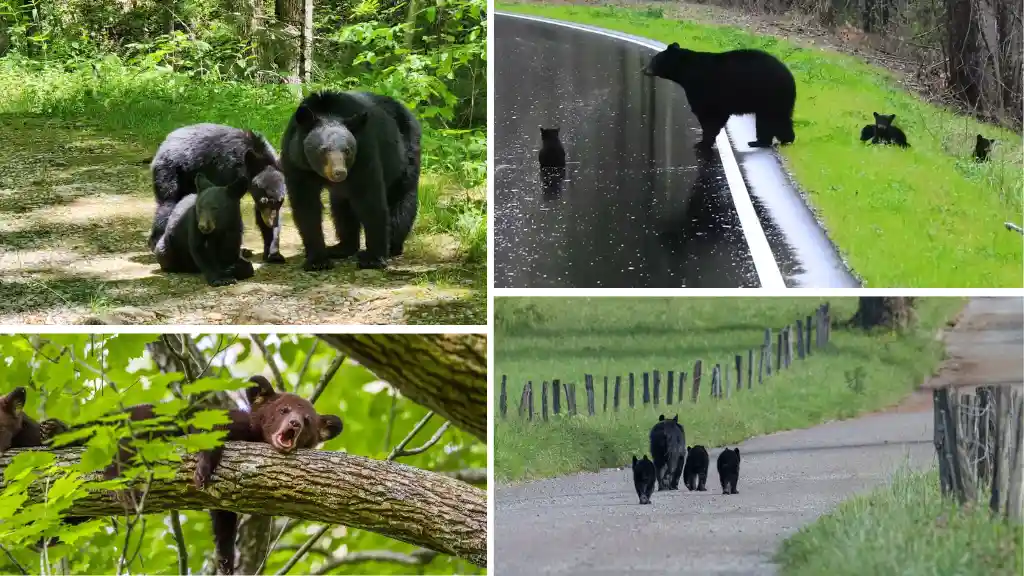
Ask any park ranger, any Gatlinburg local, any seasonal volunteer, and they’ll give you the same answer: Cades Cove is the single best place to see black bears in the Smoky Mountains. Period.
Cades Cove is a hot spot for black bears because the lush valley is home to many mast-producing trees — specifically trees that grow acorns and walnuts, which are a food source for bears. Bears also love to snack on blueberry and blackberry bushes. The cove is also a wide and large valley not overgrown with trees, so this area is ideal for spotting wildlife that would otherwise keep a low profile in the forest.
The 11-mile one-way loop road puts you at perfect elevation — low enough that you can actually see across open meadows without the forest swallowing your sightlines. You stay in the car. The bears stay in their world. And sometimes those worlds overlap right outside your window.
If you’re lucky, you may get to see a mother black bear with her cubs walking through the grass — a sight that will make grown adults go completely quiet.
📍 Plan your Cades Cove visit at the official Website NPS page
🌴 Best time for Cades Cove: Arrive before 8 AM. Spring and summer mornings before the crowds arrive are golden. Bears are most active in the cooler hours, and the meadows are still soft with morning mist.
📍 2. Newfound Gap Road — Scenic Bears at Elevation
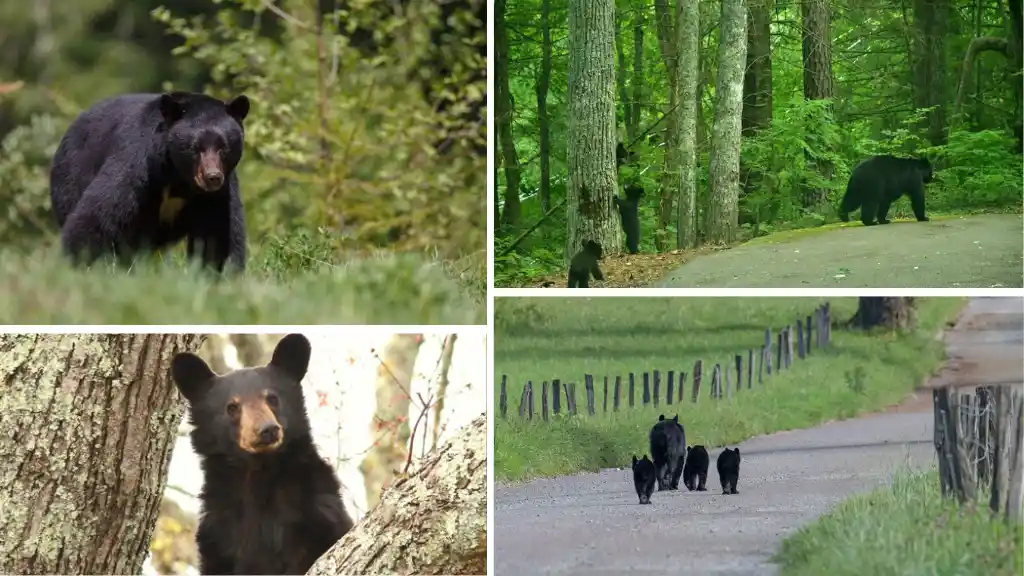
Another one of the top places to see bears in the Smoky Mountains is along Newfound Gap Road, also known as Highway 441. This scenic 33-mile route travels through some of the highest elevations of the national park. Many bears have been spotted along Newfound Gap Road for years, especially in sections close to rivers and streams, since bears like those areas for food.
The Chimneys Picnic Area — about halfway up Newfound Gap Road on the Tennessee side — is particularly worth a slow, eyes-open stop. The Chimneys Picnic Area provides an excellent chance of spotting a bear.
Pull over at any of the overlooks and scan the tree line below. Bears move along the ridges frequently, especially in fall when they’re covering miles of ground in search of calorie-dense food before winter.
Also Read: 9 Incredible Things to Do at Great Smoky Mountains Park with Family — 2026 Adventure Guide
📍 3. Roaring Fork Motor Nature Trail — Bears Right Off Gatlinburg’s Back Porch
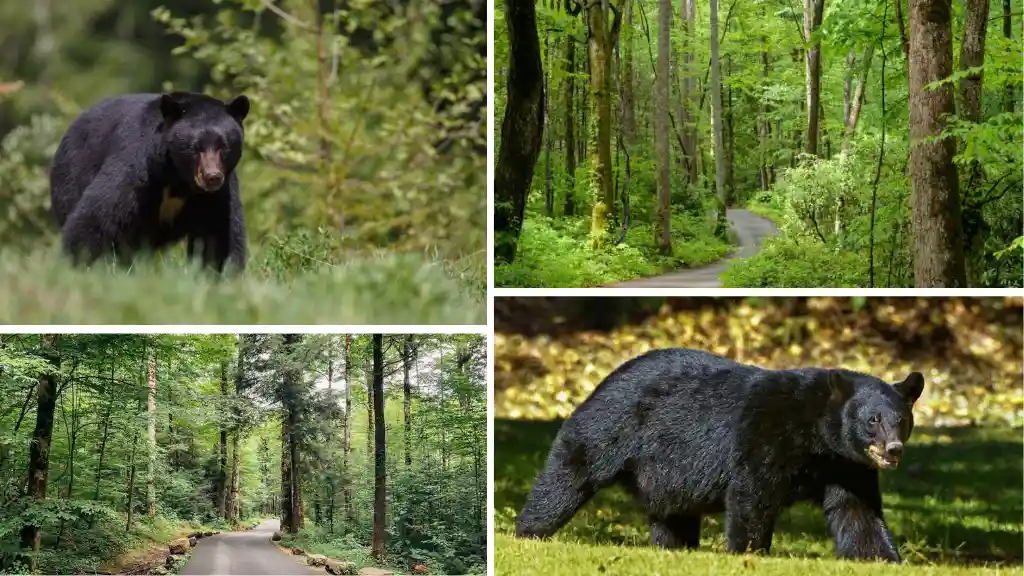
The Roaring Fork Motor Nature Trail is a beautiful 5.5-mile one-way loop road that starts and ends in Gatlinburg, making it convenient for those who want to make a quick side trip from downtown Gatlinburg.
This is the road that leads to Grotto Falls and Rainbow Falls trailheads — but even if you’re not hiking, driving it slowly with your windows down gives you real bear country energy. The old-growth forest is dense and dripping, and the stream corridor along the trail is exactly the kind of food-rich environment bears seek out.
📍 Access via Cherokee Orchard Road from downtown Gatlinburg. Note: buses, RVs, and large vehicles are not permitted. Open seasonally mid-April through late November.
📍 4. Little River Road — The Scenic Route That Delivers
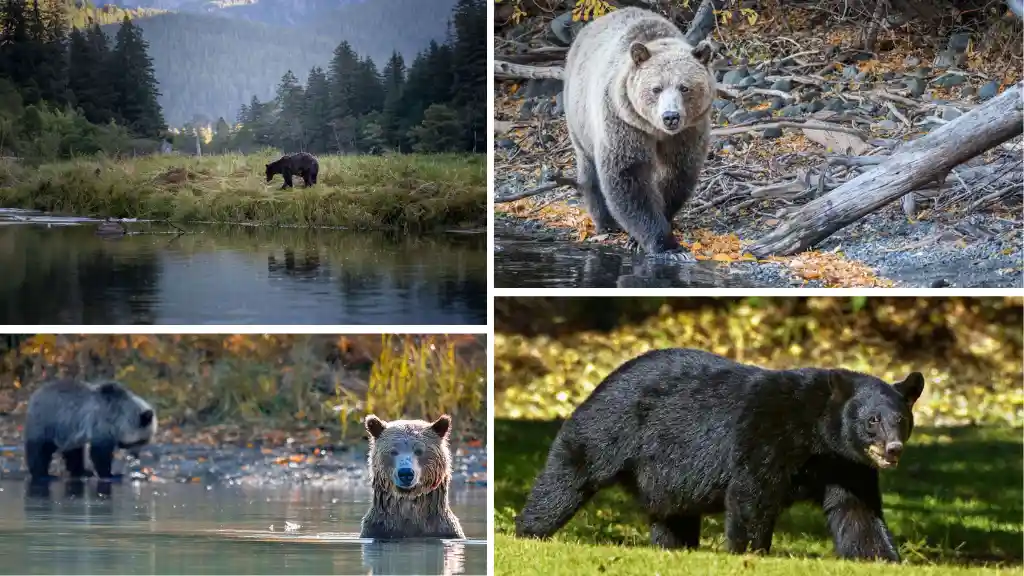
The Little River Road runs from Townsend to the Sugarlands Visitor Center and is an excellent place to see black bears in the Smokies. The road runs parallel to the Little River, so not only could you see wildlife, but it is also an incredibly scenic route. The road is lined with waterfalls, hiking trails, river accesses, swimming holes, and picnic areas.
The combination of river access, dense riparian vegetation, and low traffic makes this corridor a consistent bear-sighting location. Bears follow water. They forage the banks. They fish in the shallows. If you drive this road slowly in the early morning, with your eyes on the tree line rather than your GPS, sightings happen.
🌊 This road also connects Gatlinburg to Cades Cove, so you can bear-watch the whole drive in both directions.
📍 5. Cataloochee Valley — Remote, Wild, and Worth the Drive
Cataloochee Valley sits in a remote section of the park on the North Carolina side, reached via a narrow mountain road that keeps casual visitors away. That’s exactly what makes it so good.
Cataloochee Valley is an old community in a remote section of the park, so it is a quiet place for bears to forage. Like Cades Cove, this is a nice wide area without much tree cover, so it’s easier to spot animals like bear and deer. Additionally, Cataloochee is home to a wild elk herd.
The combination of elk and bears in one valley — against the backdrop of old log buildings from the original Cataloochee community — makes this one of the most atmospherically powerful wildlife-watching spots in the entire eastern United States.
Go at dusk. Bring binoculars. Speak quietly. The valley rewards patience.
Also Read: Top 10 Things to Do in Great Smoky Mountains National Park – 2026 Guide
Best Time of Year to See Black Bears in the Smoky Mountains
Timing matters almost as much as location when it comes to sightings. Here’s how the year breaks down:
🌿 Spring (March–May): This is the most emotional season for bear watching. Female bears emerge from their dens in late March and early April with cubs born during the winter — usually one to four per litter. The cubs are tiny, impossibly fuzzy, and stay close to mom. Sightings in Cades Cove meadows are frequent and genuinely moving.
☀️ Summer (June–August): Sightings ramp up during the lush summer months as bears become more active, foraging far and wide. Bear sightings in the park are not uncommon, especially during the early morning and late evening hours in spring and summer when they are the most active. Cades Cove and the Roaring Fork area produce the most summer sightings.
🍂 Fall (September–November): Fall hyperphagia from late September through early November produces the most overall bear activity. Bears enter a phase of intense, almost desperate feeding before winter — consuming up to 20,000 calories per day. They’re moving constantly, covering huge distances, and showing up in places you wouldn’t normally see them. The park actually reported a spike in bear sightings in April 2026, prompting temporary trail closures in high-activity zones.
❄️ Winter (December–February): Sightings are rare but not impossible. Bears in the Smokies are unique — more on that below.
🕐 Best daily window: Black bears are most active in the early morning hours (5 AM–9 AM) and evening hours (5 PM–8 PM) when they forage for food in the cooler parts of the day.
Do Black Bears Hibernate in the Smoky Mountains?
This is one of the most commonly misunderstood facts about Smoky Mountain wildlife, and the real answer is genuinely interesting.
Black bears in the Smokies don’t truly hibernate. They may enter longer periods of sleep or reduce their level of activity, but they can still wake up and roam during warmer periods of winter.
Bears choose a denning site with the coming of cold weather. Dens are usually hollow stumps, tree cavities, or wherever there is shelter. Bears in the Smokies are unusual in that they often den high above the ground in standing hollow trees.
Bears are known to be briefly roused from their winter sleep if they are disturbed or if the temperature warms. So don’t be alarmed if you do see a bear in the winter months.
What this means practically: if you’re visiting in December or January and you see a bear, that’s not unusual. It just means the temperature that week was warm enough to pull them out briefly. They go back to resting when it cools again.
What Time of Year Are Black Bears Most Aggressive?
The word “aggressive” is worth unpacking carefully here, because it can create an inflated fear of an animal that is genuinely not trying to hurt you.
Bear activity tends to increase in the spring and summer months as the animals emerge from hibernation and search for food, often bringing them closer to hiking trails, campsites, and roadways. This increased activity means more encounters — but more encounters don’t automatically mean more aggression.
The most legitimately elevated-risk scenario involves mother bears with cubs in early spring. A mother bear’s protective instincts are strongest in the first months after emerging from the den. If she feels her cubs are threatened, she may bluff-charge. She may vocalize loudly. She is not playing.
When bears access food left out by visitors or are intentionally fed, they can start to associate humans with food, which can lead to more aggressive behavior and increase the likelihood of dangerous encounters and, in some cases, lead to bears being euthanized.
The data is actually reassuring: despite the park’s roughly 12 million visitors per year, physical-contact incidents typically number under a dozen and have trended down — 6 in 2025, versus 10 in 2024.
The bears are not waiting to hurt you. They just want their valley back by nightfall.
Best Time to See Bears in Cades Cove Specifically
🌅 The answer is simple and consistent: early morning, on a weekday, in spring or fall.
Spring mornings at Cades Cove — roughly 6:30 AM to 9:00 AM — are the highest-yield windows for bear sightings, especially along the first and last sections of the loop where the open meadow gives you long sightlines. Mother bears with cubs are most visible in April and May.
Fall mornings in October are the other premium window. Bears in hyperphagia are moving constantly, covering the open meadow edges in search of acorns and berries. You’ll also likely see white-tailed deer, wild turkeys, and — if you’ve timed it right for Cataloochee — elk bugling in the distance.
🌴 Wednesday summer tip: The Cades Cove loop road closes to vehicles on Wednesday mornings from mid-June through late September, opening exclusively to cyclists and pedestrians. Bear sightings on these quiet mornings are particularly frequent because the usual car traffic isn’t disturbing the valley.
What Smells Do Black Bears Hate?
If you’re camping in or around the park, understanding bear sensory biology is genuinely useful — and maybe life-saving.
A bear’s sense of smell is seven times stronger than a bloodhound’s and up to 2,000 times more sensitive than a human’s. Sweet, savory, and non-food scents — toothpaste, sunscreen, lip balm — all attract bears. Everything with a scent must go in your bear canister, including deodorant, gum, and empty wrappers.
So what actually deters them? A few scents are consistently effective as deterrents when applied to camp perimeter areas or storage containers:
🌿 Ammonia — Ammonia has a very strong smell that bears dislike. You can spray it around the perimeter of camp or set a few cups of ammonia around the campsite.
🌿 Pine-Sol and pine-scented cleaners — The strong, disinfectant smell of Pine-Sol and similar cleaning agents is often used by campers and homeowners in bear-prone areas. Wiping down surfaces or leaving soaked rags in strategic places can serve as an effective bear repellent.
🌿 Diluted bleach — A 10:1 ratio of water to bleach, applied to the surface of bear lockers and bear-safe trash cans, can help deter bears from investigating storage areas.
🌿 Vinegar — Vinegar, with its sharp and acidic scent, is another smell that bears dislike. Apple cider vinegar and white vinegar are both effective options.
🌿 Capsaicin (bear spray) — Capsaicin is the active component in chili peppers. When concentrated, it can be used as a bear deterrent. Bear spray, a common safety tool for hikers and campers, contains capsaicin.
⚠️ Critical warning: Bear spray is often incorrectly used as a deterrent around campsites. Do NOT spray it around your campsite — the lingering smell of bear spray can actually attract bears. Bear spray is a self-defense item meant to be deployed if a bear charges and attacks.
The most effective prevention of unwanted bear encounters is to lock up any odorous items. Use lock boxes provided by campsites, as bears have been known to break into cars.
Bear Safety Rules — The 5 Things Rangers Want You to Know
Before you head out to find the best places to see black bears in the Smoky Mountains, burn these into your brain:
🐾 Stay 50 yards (150 feet) away at all times. Willfully approaching within 50 yards, or any distance that disturbs or displaces a bear, is illegal in Great Smoky Mountains National Park. This is a federal law, not a suggestion.
🐾 Never run. Running triggers a predator-prey response. Back away slowly, facing the bear, keeping your eyes on it.
🐾 Make yourself large. If a bear approaches you, raise your arms, shout firmly, and make yourself appear as big as possible.
🐾 Never feed a bear. Ever. Not once. Fed bears become dangerous bears that often have to be euthanized. The moment a bear associates humans with food, its fate is often already decided.
🐾 Hike in groups. Bears are more likely to avoid larger groups of people. Hiking in groups is not only safer in terms of wildlife encounters but also in case of emergencies.
📍 Read the official NPS bear safety guidelines
After the Bears: Where to Eat and Wind Down in Gatlinburg
You’ve had your moment. You’ve seen the bear. You’ve said the things you say when something genuinely moves you. Now you’re hungry and you deserve something good.
🍹 The Peddler Steakhouse is Gatlinburg’s most beloved institution — a wood-paneled mountain restaurant on stilts above a creek, open since 1976, where you pick your own steak cut and the salad bar has been the standard for decades. Locals celebrate everything there.
🌊 For something lighter, Smoky Mountain Brewery on the Parkway does solid craft beer and mountain-comfort pub food in a laid-back space that perfectly matches post-hike energy.
And if your morning started before sunrise for Cades Cove, Crockett’s Breakfast Camp on the Parkway does enormous mountain breakfasts — biscuits, country ham, eggs, and pancakes that stack taller than they reasonably should — in a space that feels like a warm Appalachian cabin.
Conclusion: The Bear That Doesn’t Need You to Notice It
Here’s the honest truth about looking for the best places to see black bears in the Smoky Mountains: the bear doesn’t need the encounter to be meaningful. You do.
It’s going to keep moving through that meadow whether you’re there or not. It’s going to forage the creek bank and sleep in the hollow tree and teach its cubs to climb the ridge regardless of whether your car window is down or your binoculars are focused.
That indifference is the whole point. It’s what makes the encounter real.
Go to Cades Cove before 8 AM. Drive Little River Road slowly. Be patient at Cataloochee. Carry your bear spray holstered where you can reach it. Keep the distance. Keep the respect.
And when you finally see one — when that black shape moves through the morning mist and doesn’t even glance your way — let yourself feel whatever comes up. That feeling is the Smoky Mountains doing their best work. It’s been doing it long before you arrived, and it’ll keep doing it long after you’ve gone home.
FAQs: Black Bears in the Smoky Mountains
What is the best places to see black bears in the Smoky Mountains?
Cades Cove is consistently the top location, followed by Newfound Gap Road, the Roaring Fork Motor Nature Trail, Little River Road, and Cataloochee Valley. Cades Cove’s open meadows make bears visible from a safe distance in the comfort of your car.
What time of day is best for bear sightings?
Early morning (5–9 AM) and the two hours before sunset are peak activity windows. Bears avoid the heat of midday and the peak tourist hours. Arriving at Cades Cove before 8 AM gives you the best combination of wildlife activity and manageable parking.
How many black bears live in Great Smoky Mountains National Park?
Approximately 1,900 black bears live within the park as of 2026 — roughly two bears per square mile. The population has nearly tripled since the early 1990s.
Do black bears in the Smokies actually hibernate?
Not technically. They enter a state of torpor — extended sleep — in hollow trees and stumps, but unlike true hibernation, they can be roused by warming temperatures or disturbance and may wander briefly during mild winter periods.
Is it safe to watch bears from a car in Cades Cove?
Yes — watching from your car is actually the safest and most common way to observe bears in the cove. Keep windows up if the bear approaches, don’t honk or startle the animal, and never exit the vehicle to get closer.
When are bears most aggressive in the Smokies?
Spring is the highest-risk period for encountering a protective mother bear with cubs. However, the vast majority of human-bear interactions are non-contact. In 2025, there were only 6 physical-contact incidents across 12 million park visitors. The real danger is getting too close — which is preventable.
What should I do if a bear approaches me on a trail?
Do not run. Stand your ground, raise your arms to appear large, speak in a firm, loud voice, and back away slowly. If the bear makes contact, fight back — unlike with grizzlies, fighting back against a black bear is the recommended response from NPS wildlife biologists.