
There’s something that happens to you the first time you roll down your car window on Newfound Gap Road and breathe in the air of the Smoky Mountains. It’s not pine exactly, and it’s not rain exactly — it’s something older and deeper than both, like the mountains exhaling. You feel it in your chest before you can name it.
That’s the Smokies. And 12 million people a year feel the same thing, making Great Smoky Mountains National Park the most visited national park in the entire United States — more than Grand Canyon, more than Yellowstone, more than any of them.
So what actually makes it worth the hype? What are the top 10 things to do in Great Smoky Mountains National Park that go beyond the postcards and the “must-see” lists that all say the same thing?
This is that guide. Real information, real feelings, and no padding.
First, a Few Things You Should Know Before You Go in 2026
📍 The park is free to enter. No entrance fee — one of the few major national parks that still doesn’t charge admission. However, a parking tag is required at most trailheads and popular areas. You can grab one online at the official NPS website or at visitor centers for around $5/day or $15/week.
🌴 Download offline maps before you go. Cell service ranges from spotty to completely nonexistent inside the park. Google Maps will absolutely abandon you on the back side of a ridge. Download the NPS app offline before you leave the hotel.
✈️ Base yourself in Gatlinburg or Pigeon Forge. Both towns sit right at the park’s edge. Gatlinburg is quieter and more directly connected to the park; Pigeon Forge is livelier with more family entertainment options. Either works beautifully.
Now — let’s get into the top 10 things to do in Great Smoky Mountains National Park that you’ll actually remember.
1. 🌿 Drive the Cades Cove Loop — Wildlife, History, and Pure Appalachian Soul
If you only do one thing in the park, make it this one.
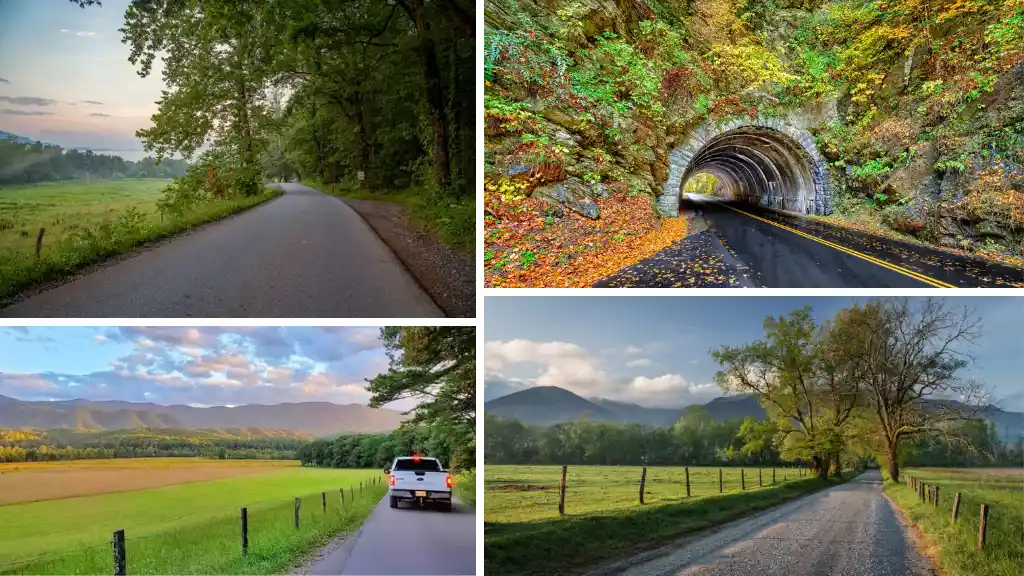
Cades Cove is an 11-mile one-way loop road that winds through a broad, flat valley surrounded by forested ridges in the Tennessee portion of the park. It was once a Cherokee hunting ground, then a 19th-century farming community, and today it’s the most wildlife-rich area in the entire park — and one of the most emotionally affecting places in Appalachia.
The Cades Cove Loop is among the best locations for wildlife viewing in the Smoky Mountains, where you can see black bears, white-tailed deer, and more. The historical structures — preserved white churches, working grist mills, and hand-hewn log cabins — make it feel like time slipped somewhere on that narrow road.
Go early. Seriously. Arriving before 8 AM is key to snagging parking at hotspots like Cades Cove, where the one-way loop opens weekends only from mid-March to December.
📍 During summer Wednesdays, the road is closed to vehicles entirely — making it the perfect morning for a bike ride through the valley with almost no one around. Rentals are available right at the loop entrance.
Plan your Cades Cove visit at the official Website NPS Cades Cove page
2. 🏔️ Reach the Top of Kuwohi — The Highest Point in the Park
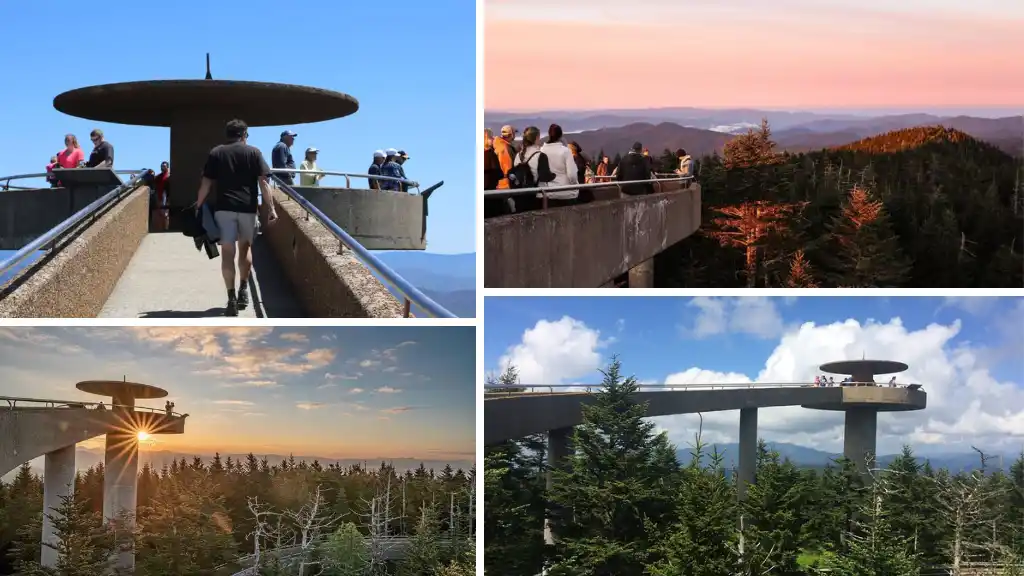
You might still see it called Clingmans Dome on older maps. This 6,643-foot round-top peak sits at the top of the park — and the state of Tennessee. To tag the high point, drive the scenic access road (closed December through March) from Newfound Gap and walk a half-mile to the summit. Don’t miss the view from the spaceship-like observation tower up top.
That half-mile sounds easy. It’s not. The paved path gains 300 feet of elevation and moves at an incline that turns most people bright red. But the view from the top — a 360-degree panorama that stretches 100 miles on clear days across multiple states — is exactly the payoff you’re pushing toward.
Kuwohi Road reopened for spring on April 1, 2026, and the crowds come quickly when it does. Go early morning for the best chance at mist-free views and manageable parking.
🌊 On foggy mornings (which are frequent), the park takes on an entirely different personality from the summit — you’re literally standing above the clouds, watching them pour through the valley below like a slow-motion ocean. It’s surreal. Bring a jacket even in summer.
3. 🌊 Hike to Grotto Falls — The Waterfall You Walk Behind
This is the one people come back from and can’t stop talking about.
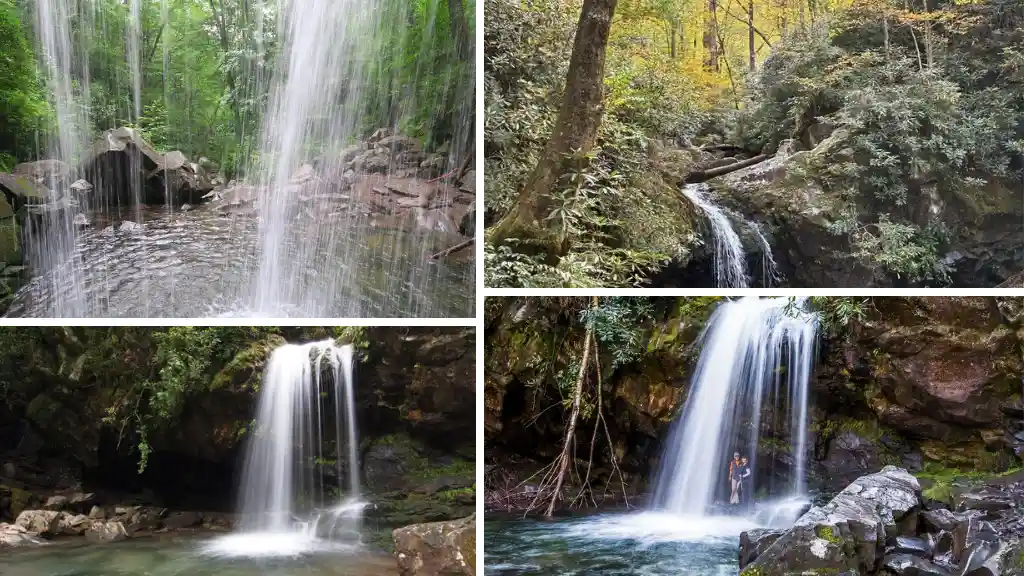
Grotto Falls Trail is a 2.6-mile roundtrip hike from the Roaring Fork area — moderately challenging, through old-growth hemlock forest — that ends at the only waterfall in the park you can walk completely behind. Grotto Falls offers a unique experience where the trail actually goes behind the waterfall.
Standing behind that curtain of falling water, the whole world goes quiet except for the roar. You’re looking out at the forest through a wall of water. Your clothes get damp. Your kids (or travel companions) make sounds of pure joy. It’s one of those experiences that doesn’t photograph well and doesn’t need to.
The trail begins off the Roaring Fork Motor Nature Trail, accessible from downtown Gatlinburg via Cherokee Orchard Road. Spring mornings are especially magical — wildflowers line the trail and the light filters green through the canopy.
🍹 Local tip: After the hike, head back to Gatlinburg and grab a cold local beer at Smoky Mountain Brewery on the Parkway. Their Mountain Light Lager hits differently after a forest hike.
4. 🌴 Drive the Roaring Fork Motor Nature Trail — Appalachian History in 5.5 Miles
This one slips under the radar compared to Cades Cove, but it shouldn’t.
The Roaring Fork Motor Nature Trail is a 5.5-mile one-way loop starting just outside downtown Gatlinburg that winds through old-growth forest, along a tumbling mountain creek, past log cabins that have stood since the 1800s, and to the trailheads for both Rainbow Falls and Grotto Falls. Once you turn onto this narrow, winding road, you’re swallowed up by old-growth forest, rushing mountain streams, and historic cabins that whisper stories of Appalachian life gone by.
Pull over at the Ogle Place — a homestead where a family once farmed this mountainside entirely by hand. Stand on that stone porch and think about the life that happened here. It costs you nothing and gives you everything.
The road has seasonal access — open mid-April through late November each year, weather permitting. Buses, RVs, trailers, and large vehicles are NOT permitted on this road.
📍 Find the Roaring Fork trail details at Official Website – Gatlinburg.com
5. 🌿 Hike the Alum Cave Trail — Geology, Drama, and Cable Handholds
For anyone willing to earn their views, the Alum Cave Trail is one of the best hikes in the entire eastern United States. Full stop.
For those seeking a challenge, the 3.6-mile (one-way) hike to Alum Cave Bluffs is a favorite. You’ll navigate through Arch Rock, a natural stone bridge, and climb over 1,200 feet. The trail is rocky and often wet, providing a true mountain experience. Many use this trail as the primary route to reach the summit of Mount LeConte.
Arch Rock is exactly what it sounds like — a natural stone arch you hike directly through, a geological dream that makes you feel like you’ve stumbled into another era. Then the trail opens onto the massive concave bluff itself: a cathedral-like overhang dripping with minerals and sulfur deposits, with views that tumble down the mountain for miles.
If you continue to Mount LeConte’s summit, add several more miles and 3,000+ feet of elevation gain — with cable handrails on the steepest exposed sections. It’s the kind of hike that makes you feel genuinely alive and slightly terrified in equal measure.
Go on a weekday. Start before 8 AM. Bring trekking poles if you have them.
Also Read: Need a Great Smoky Mountains Parking Pass? Buy It Online in Minutes
6. 🦟 Watch the Synchronous Fireflies at Elkmont — One of the Most Magical Events on Earth

This is not an exaggeration.
Synchronous fireflies in Elkmont light up June nights in a bioluminescent ballet unique globally. The fireflies — a rare species called Photinus carolinus — flash in unison, then pause in darkness, then flash again. Across hundreds of acres of forest. For about two weeks every June.
During the synchronous firefly event at Great Smoky Mountains, access to the Elkmont area of the park after 4 PM is restricted to lottery ticket holders only. The lottery opens in early spring through recreation.gov and fills up within minutes. Set a reminder. Wake up early. Enter the moment it opens.
🌊 If you miss the lottery, the fireflies are sometimes visible from the main park road outside Elkmont after dark without a vehicle permit. It’s not the same, but it’s still something otherworldly. Bring bug spray. Wear dark colors. Leave your flashlight off and let your eyes adjust. Then watch the forest pulse with cold blue-green light, and try to explain what you’re feeling.
You won’t find the right words. That’s okay.
7. 🌊 Rainbow Falls — An 80-Foot Drop and Actual Rainbows
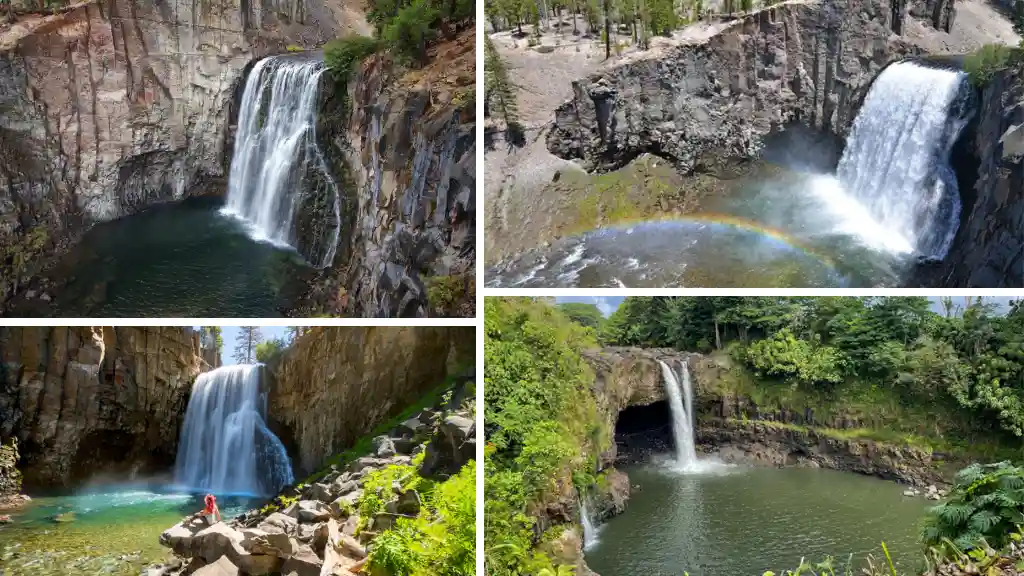
Rainbow Falls features an 80-foot drop that produces a distinct rainbow in the mist on sunny afternoons. This 5.5-mile roundtrip hike gains over 1,600 feet in elevation and takes you through some of the park’s most beautiful boulder fields.
Rainbow Falls is the tallest single-drop waterfall in Great Smoky Mountains National Park, and on clear winter days when spray freezes and catches light at the right angle, you can stand in the mist and watch actual rainbows form around you.
The trail begins at the Roaring Fork area and is consistently rated one of the most beautiful hikes in the region. It’s rated moderately difficult — rocky terrain with real elevation gain — but the payoff is earned rather than given.
Rainbow Falls Trail is a 6.5-mile trail, but the waterfall is only 2.7 miles from the parking lot at the trailhead. The trail features rocky terrain and elevation gain and might be difficult for novice hikers.
📍 Time your visit for mid-morning on a sunny day to catch the rainbow effect in the mist.
8. 📍 Walk Newfound Gap Road and Stop at the Rockefeller Memorial
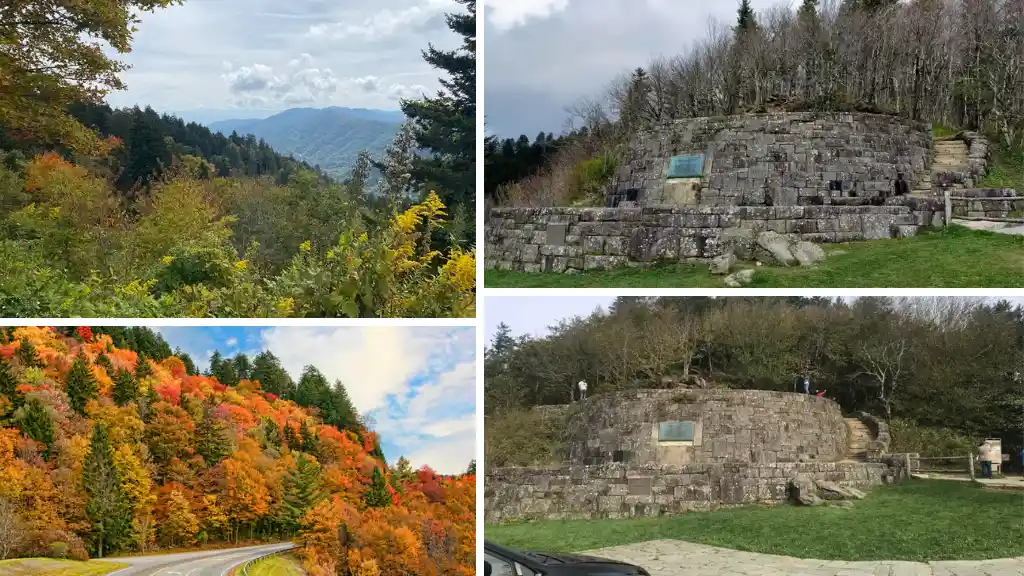
Newfound Gap Road (US-441) is the only road that crosses the park from Gatlinburg, Tennessee to Cherokee, North Carolina — a 33-mile drive that climbs from 1,400 feet to 5,048 feet at the gap itself. The drive alone is worth the trip.
At the top of the gap, the Rockefeller Memorial marks the spot where Franklin D. Roosevelt formally dedicated the park in 1940. It also sits directly on the North Carolina–Tennessee border, meaning you can stand with one foot in each state like a complete tourist. Do it anyway.
🌴 This is also one of the best places in the park to watch the clouds move. On most mornings, the mountains live inside their famous “smoke” — the evaporating moisture from billions of trees that creates the blue-gray haze that gives the range its name. Pull over. Watch it roll. Take a quiet moment.
From Newfound Gap, the Appalachian Trail runs in both directions — toward Georgia to the south, toward Maine to the north. Even walking just a mile or two on the AT from the gap gives you a feeling that’s hard to articulate — like you’re touching something that belongs to the entire country.
9. 🏞️ Visit the Mountain Farm Museum and Oconaluftee Visitor Center
This one isn’t on enough lists, and that’s a shame.
The Oconaluftee Visitor Center on the North Carolina side of the park is the best entry point for first-time visitors, and it sits next to the Mountain Farm Museum — a collection of 19th-century Appalachian farm structures gathered from around the park and reassembled into one working complex. A blacksmith shop. A barn. An apple house. A smokehouse. All authentic, all original.
Architectural gems include the Mingus Mill, a water-powered grist mill operational since 1880, and the Oconaluftee Visitor Center’s Mountain Farm Museum with its blacksmith shop and apple house.
Just down the road, Mingus Mill is an actual working grist mill powered entirely by a water-driven turbine — no electricity, no motors. It still grinds cornmeal, and you can buy bags of it. Cornbread made with Smokies cornmeal from a 19th-century mill is a very specific kind of satisfaction.
📍 Plan your visit at the NPS Website – Oconaluftee page
10. 🌅 Watch a Smoky Mountain Sunset — and Then Go Eat Like You Mean It
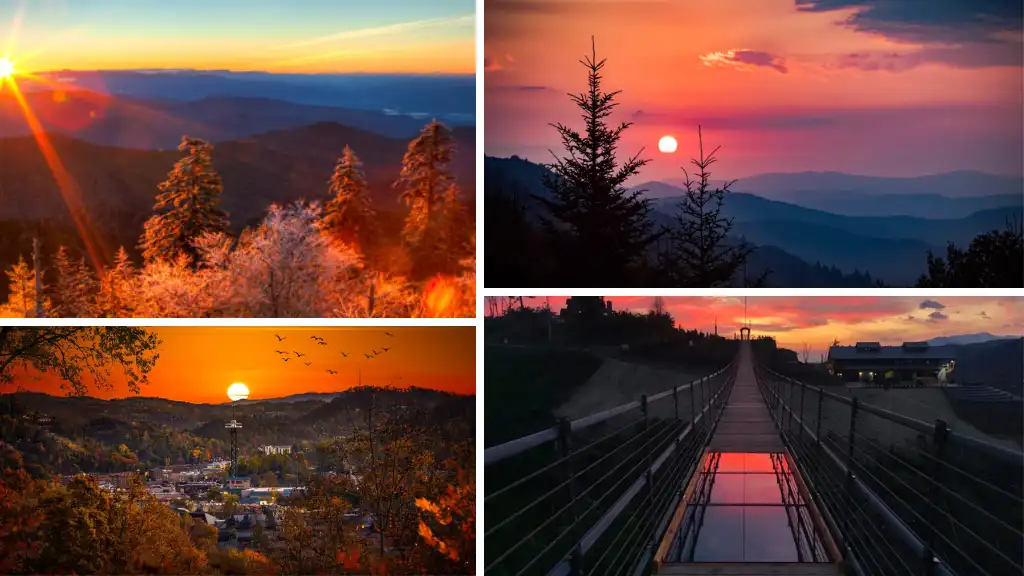
The top 10 things to do in Great Smoky Mountains National Park always end with this, and here’s why: the sunsets here are genuinely unlike anything you’ll see in a city.
From Newfound Gap, the sun goes down behind the ridgeline and the whole sky turns shades of orange and peach you can’t mix on purpose. The mist in the valleys catches the last light and glows. The ridges layer into the distance in progressively softer shades of blue until you can’t tell where the mountains end and the sky begins.
After that, you go to Gatlinburg and you eat.
🍹 The Peddler Steakhouse is a Gatlinburg institution — a dimly lit, wood-paneled restaurant built on stilts above a mountain stream, where you pick your own steak cut and build a fresh salad bar. Locals have been celebrating here since 1976. It still earns every bit of the reputation.
For a lighter vibe, Elvira’s Cafe on the Parkway does hand-crafted cocktails, local craft beer, and small plates in a cozy, modern space that feels like exactly what you need after a day in the mountains.
Practical Tips for the Smoky Mountains in 2026
🌴 Weather is never guaranteed. High elevations run 10–20°F cooler than Gatlinburg. Always pack a rain layer, even in July.
📍 Book firefly lottery tickets in early spring at recreation.gov — they go in minutes.
🌊 Laurel Falls Trail — one of the park’s most beloved short waterfall hikes — is currently closed for rehabilitation until summer 2026. Check nps.gov/grsm for updated reopening status before you plan around it. A great alternative is the Abrams Falls Trail (5 miles roundtrip) in Cades Cove.
✈️ The closest major airport is McGhee Tyson (TYS) near Knoxville, about 45 minutes from Gatlinburg. Most visitors drive from Atlanta (2.5 hours), Charlotte (3 hours), or Nashville (3.5 hours).
🍹 Bear safety matters. An estimated 1,500 to 1,600 bears live in the park. Store all food in your vehicle trunk or in bear-proof containers. Never approach or feed wildlife. Keep at least 150 feet of distance — always.
Conclusion: These Mountains Aren’t Done With You
You come to the Smokies thinking you’re going to see some trees and some wildlife and take a few photos. What actually happens is that somewhere around day two — maybe on the Alum Cave Trail when the forest goes cathedral-quiet, or at dusk in Cades Cove when a black bear ambles across the meadow like it doesn’t notice you — something shifts.
These are old mountains. The oldest range in North America. They’ve been standing here longer than the Rockies, longer than the Alps, longer than almost anything on the surface of this earth. You feel that age when you’re standing in the middle of them. It gets into you.
The top 10 things to do in Great Smoky Mountains National Park in 2026 are the same things they’ve been for a hundred years — because the mountains haven’t changed. The fireflies still pulse. The waterfalls still roar. The bears still don’t care about your schedule.
Come anyway. Come especially. You’ll leave different than you arrived.
FAQs: Great Smoky Mountains National Park
Is there an entrance fee for Great Smoky Mountains National Park in 2026?
No — the park remains free to enter in 2026. However, a parking tag ($5/day or $15/week) is required at most trailheads and high-use areas. Purchase one at nps.gov/grsm or at any visitor center.
When is the best time to visit the Smoky Mountains?
Each season offers something different. Spring (April–May) brings wildflowers and waterfalls running full. Summer has the synchronous fireflies and long days. Fall (October–November) delivers some of the most spectacular foliage in the country. Winter is quiet and often beautiful with snow on the higher ridges.
How many days do you need in Great Smoky Mountains National Park?
To truly see the highlights — Cades Cove, Newfound Gap, and at least two major hikes — a 3 to 4-day trip is recommended. This allows time for potential traffic and weather changes.
Is the park good for families with young kids?
Absolutely. Cades Cove, the Roaring Fork Motor Nature Trail, and the Mountain Farm Museum are all accessible and fascinating for young children. The Sugarlands Valley Nature Trail is paved, flat, and perfect for strollers.
How do I get firefly lottery tickets?
Monitor recreation.gov starting in early spring. Tickets typically open for sale in April and sell out within minutes. Set a reminder and have your account ready to go.
Is the Appalachian Trail accessible from the park?
Yes — the AT passes directly through the park, and Newfound Gap is one of the most popular entry points. You can hike a short stretch or commit to the full 71-mile segment that runs through the park from Georgia to North Carolina.
What restaurants are worth the trip in Gatlinburg?
The Peddler Steakhouse is the most beloved local institution, and Smoky Mountain Brewery is a great casual stop after hikes. For a modern local vibe, Elvira’s Cafe is a quieter evening option on the Parkway.

1 thought on “Top 10 Things to Do in Great Smoky Mountains National Park – 2026 Guide”