

Utah National Parks Road Trip Itinerary 7 Days: If you have ever dreamed of driving through some of the most jaw-dropping landscapes on planet Earth, then a Utah national parks road trip itinerary 7 days is exactly what you need to plan right now. Utah is home to five legendary national parks — Zion, Bryce Canyon, Capitol Reef, Canyonlands, and Arches — collectively known as the Mighty 5. Each one is wildly different from the next, and together they create one of the most spectacular road trip routes in the entire United States. One week is the perfect amount of time to see all five parks without rushing, and this guide will walk you through every single day, every must-do hike, and every important tip you need for 2026.
So buckle up, load up your playlist, and get ready — this is your complete Utah national parks road trip itinerary 7 days guide.
Why 7 Days Is the Perfect Length for Utah’s Mighty 5
One full week gives you the chance to see all 5 Utah National Parks, or a combination of national parks and other spectacular places like Monument Valley or Grand Staircase-Escalante National Monument. Seven days hits the sweet spot — long enough to actually breathe in every park and short enough that you won’t feel exhausted by the end. This Utah national parks road trip itinerary spans approximately 1,100 miles and 19 hours of total driving spread across the week. That sounds like a lot, but split over seven days it feels completely manageable and deeply rewarding.
Important 2026 Updates Before You Hit the Road
Before jumping into the day-by-day breakdown of this Utah national parks road trip itinerary 7 days, here are a few critical 2026 updates every traveler needs to know.
- America the Beautiful Pass: Entry to all five parks costs $150 for a standard passenger vehicle without a pass. The America the Beautiful Pass is $80 for US residents or $250 for non-residents starting in 2026. You will break even on the third park and come out ahead on the rest. It is also valid for a full year at over 2,000 federal recreation sites across the country. Buying the pass is a no-brainer if you are visiting all five parks.
- Arches No Longer Requires Timed Entry: As of 2026, Arches ended its timed entry reservation program after a four-year pilot. You can show up without booking in advance. That said, the park is wildly popular, and during peak season you can hit long lines and full parking lots between 8 AM and 3 PM. Get there early, especially for the Delicate Arch trailhead.
- Angels Landing Permits at Zion: Permits are still required for Angels Landing in Zion. Check the official Zion National Park website for the most current permit lottery information before your trip.
The Route — Where Does This Road Trip Start and End?
The most popular and efficient route for a Utah national parks road trip itinerary 7 days starts from either Las Vegas, Nevada or Salt Lake City, Utah. This 7-day Utah national parks road trip itinerary follows a simple loop from Salt Lake City and takes you through Zion, Bryce Canyon, Capitol Reef, Arches, and Canyonlands. The route is easy to follow, you will spend more time in Zion and Arches, with shorter scenic stops at Bryce Canyon, Capitol Reef, and Canyonlands before heading back to Salt Lake City. It is paced well so you can see a lot without feeling like you are always in the car.
If you are flying in, Las Vegas is a particularly popular gateway since Zion National Park is only about 2.5 hours away.
Day 1 — Arrive and Explore Zion National Park
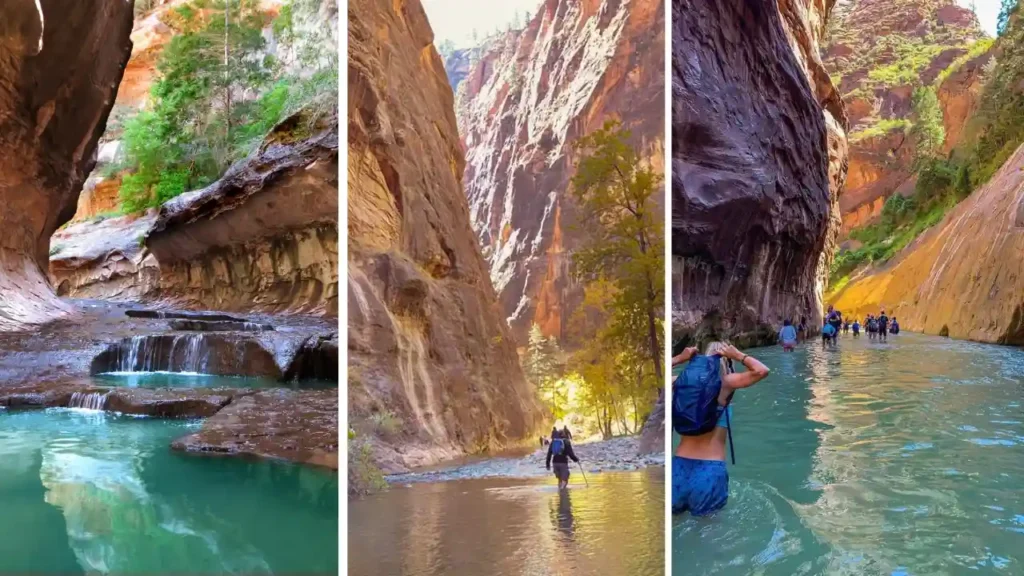
- Drive from Las Vegas: approximately 2.5 hours
- Stay in: Springdale, UT (gateway town to Zion)
Welcome to your Utah national parks road trip itinerary 7 days — and what a way to start! Zion National Park is the busiest national park in Utah and one of the most visited in the entire country, drawing close to 5 million visitors a year. Zion is Utah’s most popular national park, known for its towering red cliffs, lush green valleys, and amazing slot canyons. Zion Canyon is the highlight, which includes the famous hikes of the Narrows and Angel’s Landing.
Best things to do on Day 1 in Zion:
Arrive early and catch the free park shuttle from the Zion Canyon Visitor Center. Ride it all the way to the end of the canyon and walk the Riverside Walk, a flat 2-mile round-trip path right alongside the Virgin River. If you are feeling adventurous and have your permit, tackle Angel’s Landing for a heart-pounding 5.4-mile hike with some of the most incredible views you have ever seen. For a more relaxed afternoon, drive the stunning Zion-Mount Carmel Scenic Highway through switchbacks carved right into the canyon walls.
Have dinner in the charming town of Springdale, which lines up right outside the park entrance with great restaurants and cozy lodges.
Pro Tip: Enter through the South Entrance near Springdale if coming from Las Vegas. The park shuttle runs from spring through fall and is the best way to get around inside the canyon.
Day 2 — Go Deeper in Zion, Then Drive to Bryce Canyon
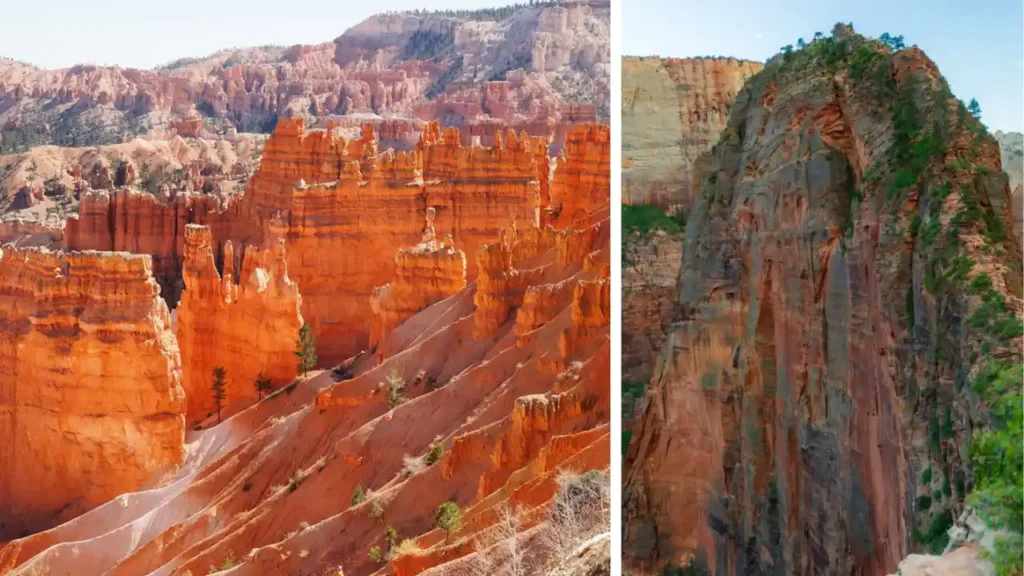
- Drive from Zion to Bryce Canyon: approximately 2 hours
- Stay in: Bryce Canyon City or inside the park
Spend your morning doing the one hike you absolutely cannot skip in Zion — The Narrows. This iconic slot canyon hike takes you directly through the Virgin River, walking between walls of red sandstone that tower hundreds of feet above you. It is unlike anything else in the world. Even wading a mile in feels extraordinary.
The recommended plan is an early wakeup in Zion, a full morning in the park, then an evening drive to Bryce Canyon. The drive from Zion National Park to Bryce Canyon National Park takes about 2 hours.
Arrive at Bryce Canyon in the evening and catch the last golden light of sunset from Sunrise Point or Bryce Point. The colors that wash over the hoodoos at dusk are something words genuinely cannot do justice.
Pro Tip: The Zion-Mount Carmel Highway connecting the two parks is itself a scenic masterpiece. Do not rush through it — pull over for photos at the tunnel viewpoint.
Day 3 — Bryce Canyon National Park — The Hoodoo Kingdom
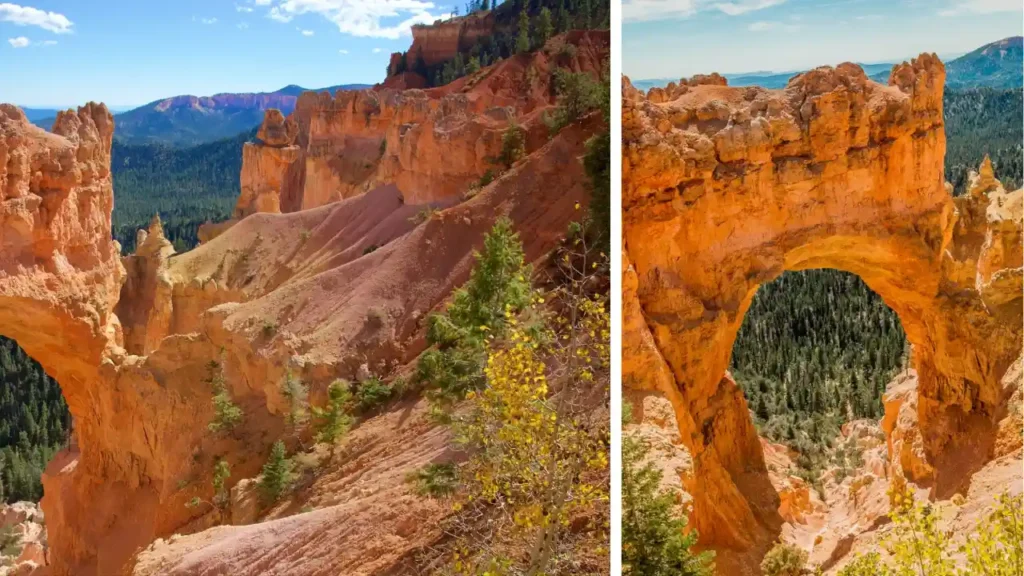
- Stay in: Bryce Canyon City
Bryce Canyon is a small park, famous for having the biggest concentration of hoodoos in the world. It is a surreal landscape that glows at sunrise and sunset. Hoodoos are tall, thin spires of rock that look like something out of a science fiction movie, and Bryce Canyon has millions of them. The best time to see them is at sunrise — the orange and pink light turns the entire amphitheater into a glowing otherworldly painting.
Best things to do on Day 3 in Bryce Canyon:
Wake up before sunrise and get to Sunrise Point or Inspiration Point before the crowds arrive. Then hike the Queens Garden and Navajo Loop Trail, which takes you down into the hoodoos and through the famous Wall Street slot canyon — a spectacular 2.9-mile loop that every visitor should do. Drive the 18-mile scenic Bryce Canyon Rim Road to hit all the major viewpoints, including Bryce Point, Inspiration Point, and Rainbow Point at the far end.
Pro Tip: Bryce Canyon sits at over 8,000 feet elevation, making it noticeably cooler than the other Utah parks. Even in summer, bring an extra layer for early morning visits.
Day 4 — Capitol Reef National Park — Utah’s Hidden Gem
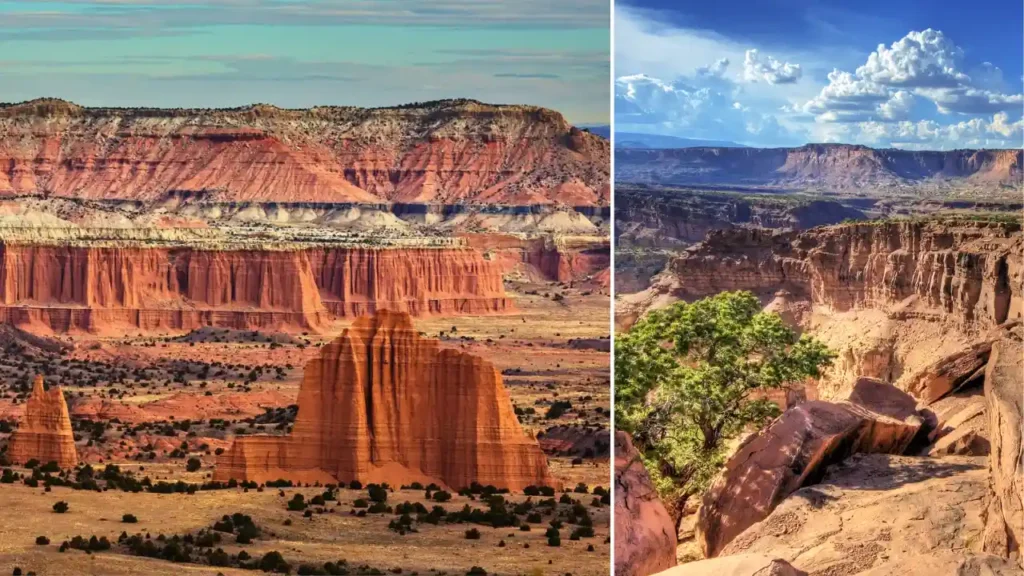
- Drive from Bryce Canyon to Capitol Reef: approximately 2.5 hours
- Stay in: Torrey, UT
Most people underestimate Capitol Reef and it turns out to be one of the biggest highlights of the entire Utah national parks road trip itinerary 7 days. Capitol Reef is Utah’s most underrated national park. It has an impressive mix of towering red cliffs, arches, and canyons, but the fruit orchards within the park are the most unique. Plus it has the best scenic drives of all the parks.
Best things to do on Day 4 in Capitol Reef:
Drive the Scenic Drive through Capitol Reef — a 25-mile out-and-back road that winds through some seriously dramatic canyon walls, domes, and cliffs. Stop at the historic Fruita orchards, where you can actually pick fresh fruit directly from the trees during harvest season (late summer and fall). Hike the Cassidy Arch Trail for a 3.5-mile round trip that rewards you with views of a massive natural arch. The drive through the Waterpocket Fold — a 100-mile long wrinkle in the Earth’s crust — is something you genuinely cannot see anywhere else on the planet.
Have dinner in the tiny town of Torrey, which has some surprisingly great food options and a warm small-town vibe.
Day 5 — Canyonlands National Park — Big Sky and Big Canyons
- Drive from Torrey to Moab: approximately 2.5 hours
- Stay in: Moab, UT
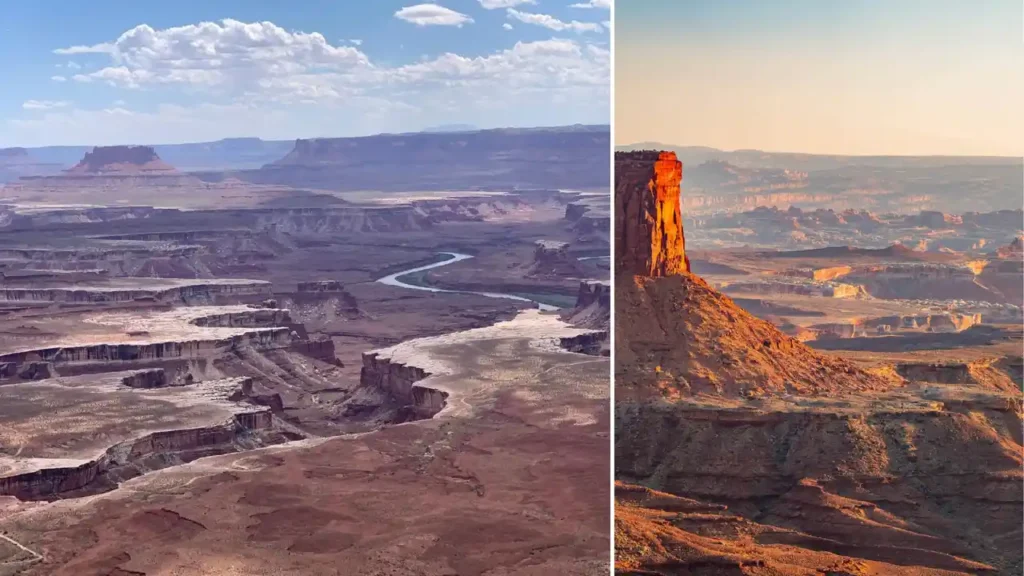
Moab is the adventure capital of Utah and the perfect base for both Canyonlands and Arches. Canyonlands is the largest of Utah’s national parks. It is rugged and is divided into two main districts. The Island in the Sky district is the most accessible and most visited, sitting on a massive mesa with views stretching hundreds of miles in every direction.
Best things to do on Day 5 in Canyonlands:
Drive to the Island in the Sky district and start at the Grand View Point Overlook — arguably one of the most stunning viewpoints in all of America. Hike the Mesa Arch Trail, a short but incredibly rewarding 0.5-mile loop that ends at a natural arch framing a sweeping canyon vista. Catch sunrise at Mesa Arch for the best possible photograph on your entire trip. In the afternoon, head back toward Moab for dinner and a good rest — you still have Arches coming tomorrow!
Pro Tip: Moab has excellent restaurants and nightlife for a small town. It is a favorite hub for outdoor adventure lovers and the energy here is contagious.
Day 6 — Arches National Park — Nature’s Most Famous Sculptures
- Stay in: Moab, UT
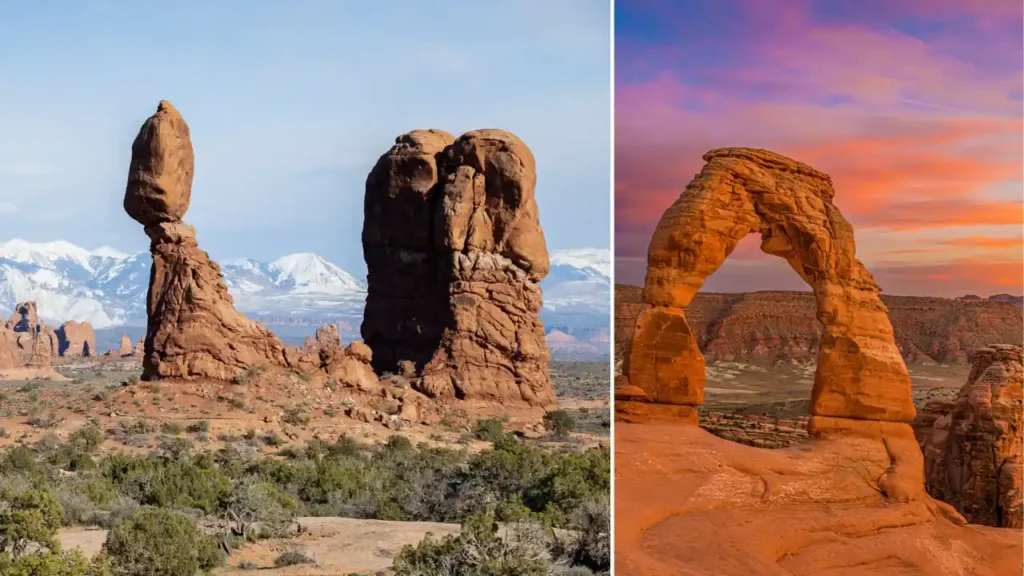
Day 6 of your Utah national parks road trip itinerary 7 days brings you to one of the most photographed places on Earth. Arches Nationa Park contains over 2,000 natural sandstone arches within a relatively compact area, making it uniquely accessible and endlessly photogenic.
Best things to do on Day 6 in Arches:
The must-do hike is Delicate Arch — a 3-mile round trip that ends at the iconic freestanding arch you have seen on the Utah license plate. Time this hike for late afternoon and you will arrive at the arch just as the sun dips low and the sandstone glows fire red and orange. It is the single most memorable moment on the entire Utah national parks road trip itinerary 7 days for many travelers.
Also visit the Windows Section for easy, short hikes through multiple large arches, and take the park’s scenic drive for views of Balanced Rock, Garden of Eden, and the Fiery Furnace.
Pro Tip: Arrive at the park before 8 AM during peak season (spring through fall) to avoid parking lot full situations. Afternoon visits are also excellent once the morning rush clears after 3 PM.
Day 7 — Scenic Drive Home Through Monument Valley or Moab to SLC
- Drive options: Moab to Salt Lake City is 3.5 hours / Moab to Las Vegas is 6 hours
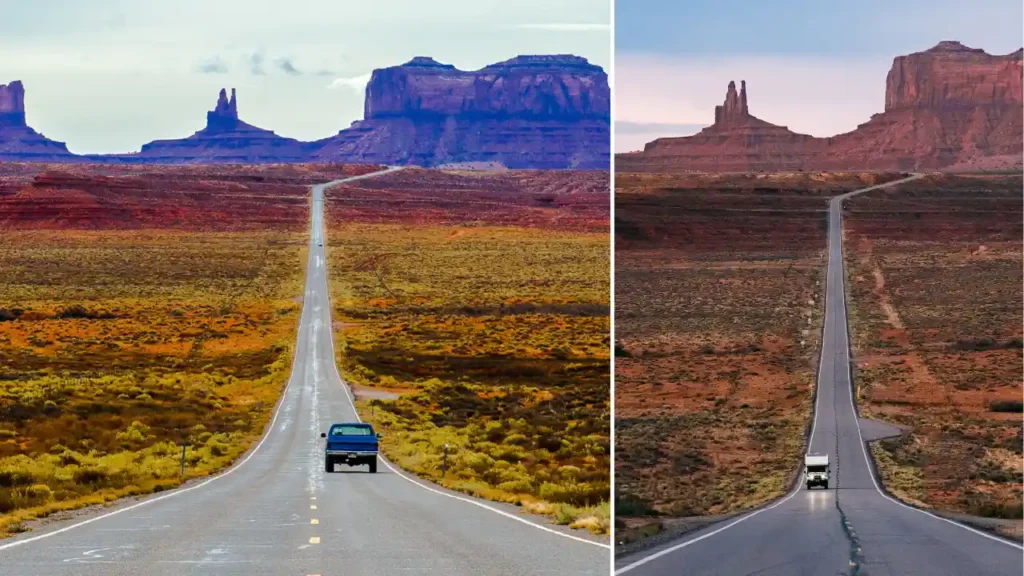
Your final day wraps up this epic Utah national parks road trip itinerary 7 days with one last scenic stretch. If you have extra time, take a detour through Monument Valley on the Utah-Arizona border — the towering red mesas and buttes there are cinematic and hauntingly beautiful. It adds about 2 hours to the drive south but is absolutely worth it if you can swing it.
If heading north to Salt Lake City, stop at Dead Horse Point State Park just outside Moab — a jaw-dropping overlook above a bend in the Colorado River that rivals anything you have seen inside the national parks. It is a Utah state park that most road trippers skip, and that is a shame.
Bonus: Side Trips That Make This Road Trip Even Better
- A great Utah national parks road trip itinerary 7 days has room for at least one bonus detour depending on your interests and energy level.
- Monument Valley (Utah/Arizona border): One of the most iconic landscapes in the American Southwest. The famous Mittens buttes have appeared in countless movies and TV shows. A 17-mile scenic drive winds through the valley floor.
- Grand Staircase-Escalante National Monument: A massive and wild landscape between Bryce Canyon and Capitol Reef with incredible slot canyons, petroglyphs, and remote hiking. From Grand Staircase, the Grand Canyon’s south rim entrance is just under 3 hours by car.
- Dead Horse Point State Park: A free-feeling state park outside Moab with a view of the Colorado River that rivals even the national parks around it.
- Kodachrome Basin State Park: A colorful and quirky state park between Bryce Canyon and Capitol Reef with striking stone spires called sedimentary pipes found nowhere else on Earth.
Essential Packing List for Your Utah National Parks Road Trip
Every traveler planning a Utah national parks road trip itinerary 7 days should pack these essentials:
- America the Beautiful Pass (buy before you go online)
- Reusable water bottles — at least 2 liters per person minimum
- Sunscreen and wide-brimmed hat (the sun is intense at elevation)
- Layers — mornings and evenings can be cold even in summer
- Hiking boots with ankle support for canyon terrain
- Downloadable offline maps (cell service is nearly zero in most parks)
- Headlamp for early sunrise hikes
- Snacks and a small cooler for the long drives between parks
- Camera or charged phone — you will take hundreds of photos
Best Time of Year to Do the Utah National Parks Road Trip
Spring (March through May) and fall (September through November) are widely considered the best seasons for a Utah national parks road trip itinerary 7 days. Temperatures are comfortable for hiking, crowds are lighter than summer, and the light at sunrise and sunset is absolutely magical. Summer works too but July and August bring intense heat (over 100°F in the lower elevation parks) and the biggest crowds of the year. Winter is beautiful and uncrowded but some roads and trails may be inaccessible due to snow, especially at Bryce Canyon and Capitol Reef.
| Day | Park / Destination | Key Activity | Drive Time |
|---|---|---|---|
| Day 1 | Zion National Park | Riverside Walk, Scenic Highway, Shuttle | Arrive via Las Vegas (~2.5 hrs) |
| Day 2 | Zion → Bryce Canyon | The Narrows hike, Sunset at Bryce | ~2 hrs between parks |
| Day 3 | Bryce Canyon National Park | Navajo Loop + Queens Garden, Rim Drive | Stay in Bryce area |
| Day 4 | Capitol Reef National Park | Scenic Drive, Fruita Orchards, Cassidy Arch | ~2.5 hrs from Bryce |
| Day 5 | Canyonlands National Park | Mesa Arch, Grand View Point Overlook | ~2.5 hrs to Moab |
| Day 6 | Arches National Park | Delicate Arch hike, Windows Section | Stay in Moab |
| Day 7 | Drive Home (SLC or Las Vegas) | Dead Horse Point, Monument Valley detour | 3.5 hrs (SLC) / 6 hrs (LV) |
Frequently Asked Questions (FAQs)
Q1. How many miles is a Utah national parks road trip itinerary 7 days?
The full loop covering all five Utah national parks covers approximately 1,100 miles total. This breaks down to about 150 to 200 miles of driving per day, which is very manageable and leaves plenty of time for hiking and exploring each park.
Q2. Do I need a special vehicle for a Utah national parks road trip?
A standard rental car handles all the main highlights on a 7-day Utah itinerary. You only need 4WD if you are venturing into backcountry areas like White Rim Road in Canyonlands or Cathedral Valley in Capitol Reef. For the main paved roads and popular trailheads, any regular car works perfectly fine.
Q3. Should I buy the America the Beautiful Pass for this road trip?
Absolutely yes. Entry to all five parks costs $150 total for a standard passenger vehicle without a pass, while the America the Beautiful Pass is only $80 for US residents in 2026. You break even at the third park and save money on every park after that. It is one of the best deals in American travel. San Francisco Ferries
Q4. What is the best starting city for a Utah national parks road trip itinerary 7 days?
Both Las Vegas and Salt Lake City work great as starting points. Las Vegas is the most popular gateway because it puts you just 2.5 hours from Zion, your first stop. Salt Lake City works well if you prefer to start from the northern end and drive the loop in reverse through Arches and Canyonlands first.